All Rummy Game: What I Found After Testing the Whole Category Properly
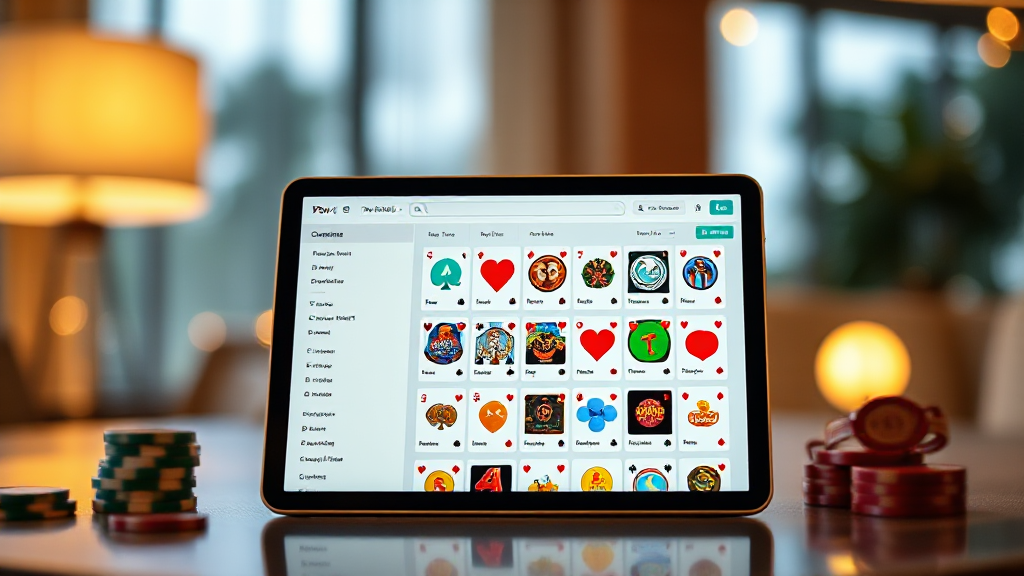
Something changed in the rummy app space over the past couple of years, and it is the reason a phrase like All Rummy Game now sends people hunting through directories instead of app stores alone. The change is structural. Rummy stopped being one product with one ruleset and became a category: Indian Rummy, Points Rummy, Pool Rummy, Deals Rummy, Rummy 500, Gin Rummy, Kalooki, and a long tail of regional variants, each with its own app, its own table culture, and its own interface quirks. When I sat down to test the category properly rather than review a single app, I needed a way to see the whole field at once. That is what pushed me toward curated discovery hubs, and the most useful starting point I found was All Rummy Game, a directory that groups rummy titles alongside other card and game applications instead of burying them in a single search result.
This is not a review of one app. It is the background that makes the rest of the category make sense: why the field fragmented, what actually separates a good rummy app from a bad one once you stop trusting screenshots, and how to evaluate a dozen of them without losing a weekend to it.
Why the Rummy Category Fragmented, and What That Means for Players
For a long time, “rummy” meant one thing to most players: a card game you learned from a relative, played with a physical deck, and understood through house rules. The digital version inherited that ambiguity rather than resolving it. Every developer who built a rummy app had to choose a variant, then choose how strictly to enforce it, then choose how much of the physical game’s social texture to simulate. Those three decisions multiplied across hundreds of releases, and the result is a category where two apps with nearly identical names can play nothing alike.
The fragmentation is not a flaw. It is a sign that the game has real depth. Indian Rummy alone splits into at least three scoring formats that change how you play every hand. Points Rummy is a single-deal sprint where one bad discard can end your session. Pool Rummy spreads the risk across multiple deals and rewards patience over aggression. Deals Rummy caps the number of rounds and forces you to think about cumulative position rather than any single hand. A player who is strong at Pool Rummy can be genuinely weak at Points Rummy, because the formats reward opposite instincts.
Then there is the international side. Rummy 500, Gin Rummy, Kalooki, and their variants share DNA with the Indian formats but diverge on melding rules, joker usage, and how a hand ends. An app that handles Indian Rummy beautifully may handle Gin Rummy awkwardly, or not at all. This is why browsing a directory beats browsing an app store: a store shows you popularity, while a curated listing shows you what a title actually contains.
The practical consequence for anyone searching for an All Rummy Game solution is that there is no single best app. There is only the best app for the format you actually want to play, at the pace you want to play it, on the device you own. Everything else is marketing.
What Separates a Well-Built Rummy App From a Weak One
I tested across the category with a consistent method, and the differences showed up in predictable places. Here is what actually mattered, in rough order of how much it affected the experience.
Rule transparency. The best apps state their variant and scoring rules in plain language before you sit at a table. The weakest ones let you discover the rules by losing. If an app cannot explain how a joker is declared or how a full hand is valued, that is a signal about how much care went into everything else.
Table pacing. Rummy is a thinking game, and the interface should protect thinking time rather than punish it. Apps that rush the discard phase, auto-sort your hand in ways you did not ask for, or bury the meld confirmation behind an animation are optimizing for spectacle over play. The good ones feel calm even when the table is fast.
Hand readability. This sounds trivial and is not. A rummy hand is a puzzle, and the app’s job is to present that puzzle clearly: grouping, sorting, color coding, and a meld preview that shows you what a valid declaration would look like. Apps that get this right are dramatically easier to learn on.
Offline and solo modes. A surprising number of rummy apps assume a live opponent. The ones I kept returning to offered practice tables, solo drills, or offline play against a computer, which is how most people actually learn a variant before risking anything at a real table.
Device range. Rummy is a game people play in short bursts, which means phone-first design matters more than tablet or desktop polish. Apps that scale cleanly from a small screen upward earned a lot of goodwill from me.
Update cadence. A rummy app that has not been touched in two years is usually a rummy app with unresolved bugs. Directory listings that show recent activity are more valuable than listings that only show download counts.
None of these criteria require the app to be famous. Several of the strongest titles I tried were small, focused, and clearly built by people who play the game themselves.
How to Evaluate the Whole Category Without Wasting Your Time
Testing dozens of rummy apps one at a time is inefficient, and it is the reason most people give up and install whatever ranks first. A better approach is to treat the category as a map before you treat it as a shopping list.
Start by deciding which format you actually want. If you are learning, Points Rummy is the fastest feedback loop because every hand resolves quickly and mistakes are obvious. If you want longer sessions with more strategic depth, Pool Rummy or Deals Rummy will hold your attention better. If you grew up with Western rummy, start with Gin Rummy or Rummy 500 and work outward. Writing this down before you browse saves you from installing five apps that all do the same thing.
Next, filter by the criteria that are non-negotiable for you. For most players that means offline practice, a clear rules reference, and an interface that does not fight the hand. Anything beyond that is preference.
Then use a directory the way it is meant to be used: as a comparison surface rather than a download button. A good listing tells you what a title is, what it covers, and where it sits relative to its neighbors. That context is the part app stores strip out, and it is the part that saves the most time.
Finally, give each shortlisted app a real session rather than a two-minute glance. Play at least ten hands. The first five teach you the interface; the next five reveal whether the rules engine is consistent, whether the pacing holds up, and whether you would voluntarily open it again tomorrow. That is the only test that matters.
One more habit worth building: keep notes. A short line per app on format, pacing, and one thing that annoyed you is enough to make the second round of selection almost instant. Most people skip this and end up re-testing the same apps six months later.
The category is wide, but it is not chaotic once you have a frame for it. The frame is format first, criteria second, comparison third, and real play last. Everything else, including the app store charts, is noise.
What makes the field genuinely interesting right now is that the fragmentation has stabilized into something usable. Developers have largely settled on which variants they support, cross-platform performance has improved, and the practice and solo modes that were rare a few years ago are now common enough to expect. A player entering the category today has a much smoother path than someone who tried five years ago, provided they approach it as a category rather than a single download. That is the background worth carrying into every rummy decision you make from here: pick the format, hold the app to the criteria that actually affect play, and let a curated listing do the comparison work instead of your weekend.
If you take one thing from this, take the method. The apps will keep changing, names will shift, and new variants will keep appearing, but the questions that separate a good rummy experience from a frustrating one have stayed remarkably stable. Ask them in the same order every time and the category stops being overwhelming.




More Stories
AI Sex Chat: How Conversational AI Is Redefining Intimate Digital Companionship
Freighter Wallet App: A Non-Custodial Gateway to the Stellar Ecosystem